
Windows · Schueco CT 70
Arched, shaped and heritage-style uPVC windows
Arched heads, round and raked windows, glazing bars and woodgrain finishes, all made from the same CT 70 profile as our standard windows. For gable ends, period-style new homes, additions to older houses and work near heritage items.
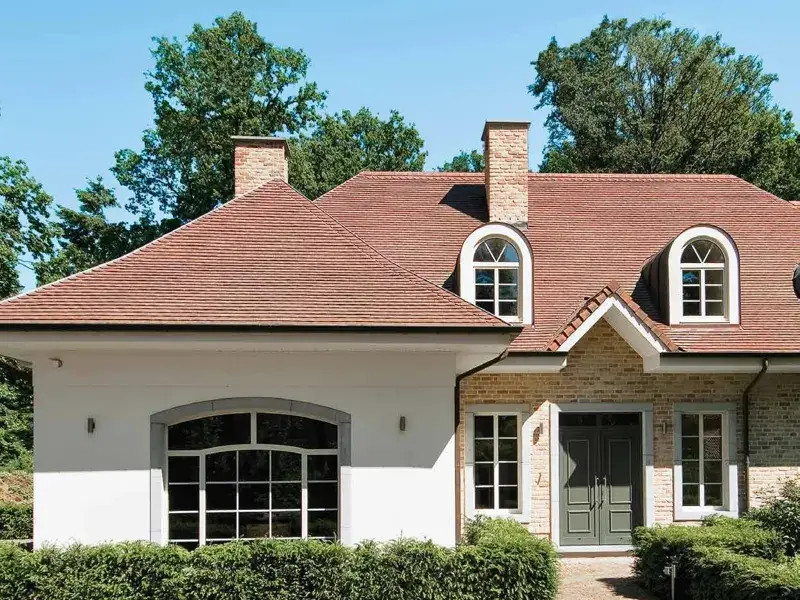
Shapes we make
Schueco CT 70 can be made in shaped units, so a window doesn't have to have four square corners. The common shapes are:
- Full arch. A semicircular head on a rectangular window, the classic Georgian and Federation fanlight shape.
- Segmental arch. A shallow curved head, common over doors and wide windows on Victorian and Federation houses.
- Round. Circular windows for gables, stairs and feature walls.
- Raked and trapezoid. A sloping head that follows the roof pitch in gables, clerestories and stair voids.
- Triangular. Gable apex lights, often over a row of rectangular windows.
Shapes can be combined in one frame with straight units, such as an arched fixed light over two casement sashes, or a raked head over a pair of French doors.
Fixed or opening
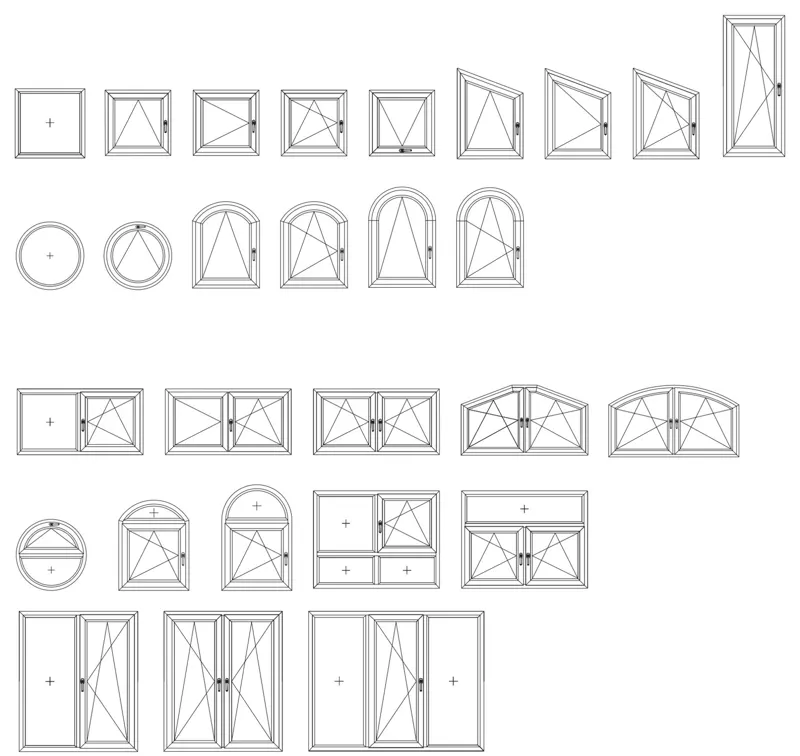
Most shaped lights are fixed, with the glass in the frame for the slimmest edge. Many can open: Schueco's VarioTec hardware data covers tilt and turn sashes in round-arch, segmental-arch, raked and triangular shapes. Where a shape is too small, too large or too tightly curved for a sash, we make it fixed and put the opening sash beside or below it.
Things to plan for
Foiled frames are always steel reinforced, and a foiled CT 70 element is limited to 5.0 m² against 7.0 m² in white. A large arched or raked unit in a woodgrain foil may need a transom or mullion.
Give us the springing height, rise and width of each arch, or the angle of each rake, on a dimensioned elevation.
Glazing near floor level, beside doors or in wet areas needs safety glass under AS 1288, and shaped glass is no exception. Mark those panes and we'll specify the glass.
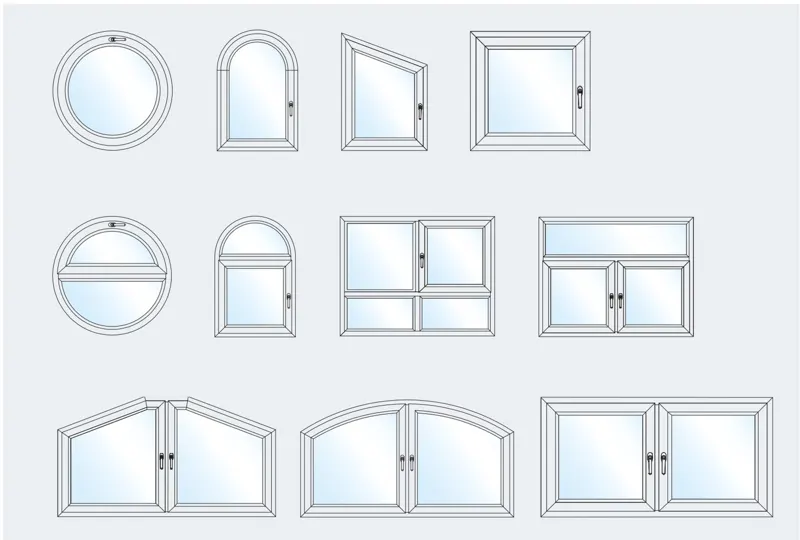
Round, arched and raked units, alone and combined with rectangular sashes.
| System | Schueco Corona CT 70 |
|---|---|
| Shapes | Full arch, segmental arch, round, raked, triangular, combinations |
| Opening types | Fixed; opening sashes on many shapesSchueco VarioTec fittings for round-arch and shaped sashes |
| Profile depth | 70 mm, five-chamber frame |
| Sash contours | Classic (square-edged) or Rondo (rounded, stepped, 78 mm deep) |
| Glazing bars | Matched to the frame in design and colour |
| Glazing | 4–42 mm: double or triple glazed |
| Fixed glass weight | Up to 250 kgAlways reinforced; Schueco CT 70 max sizes |
| Max element area | 7.0 m² white; 5.0 m² foiled6.0 m² foiled with 2 mm or heavier reinforcement |
| Finishes | White, 300+ foils incl. woodgrains, TopAlu aluminium cladding in any RAL colour |
| Frame U-value (Uf) | From 1.2 W/(m²K) |
| AS 2047 rating | Test reports on request |
Glazing bars
Georgian-style divisions
Glazing bars split a window into smaller panes, the way older timber windows were built. We fit them inside the double glazed unit, in the gap between the two panes, and the layout changes how an elevation reads:
- Horizontal bars stress the width of a window.
- Vertical bars give slender, upright panes.
- Both give the grid of a Georgian or colonial sash window.
- No bars on tall windows let the most light in.
Because the bars sit between the panes, the glass is flat inside and out: nothing to clean around, nothing to come loose, and the sealed unit keeps its thermal and acoustic rating. Up close, internal bars read as a pattern behind the glass rather than as separate panes. Some heritage DCPs ask for bars on the outside of the glass or for true divided panes, so check the council's requirement before you specify.
Glazing bars also need to suit the energy and acoustic spec. Mention them when you send the BASIX certificate or acoustic report so we price the right glass units.
Heritage and conservation areas
Working with council heritage controls
In NSW, heritage items and heritage conservation areas are listed in each council's Local Environmental Plan. The council's Development Control Plan then sets the detailed controls, and for windows these usually cover proportions, glazing bar layout, frame colour, how the window sits in the reveal and, sometimes, the material.
Councils take different views on uPVC. Some accept it where the new windows match the original proportions, divisions and colour, especially on rear and side elevations or new additions. Others still expect timber on the main street elevation of a heritage item or a contributory building. Exempt and complying development pathways are often not available for heritage items, so the window change may need a development application.
Check the requirements with the council, or with your heritage consultant, before you specify uPVC. What helps your application:
- Elevations of the existing windows with dimensions and glazing bar layout
- CT 70 section drawings showing sight lines next to the timber profile they replace
- Finish samples: the woodgrain or colour proposed, inside and out
- The Rondo sash, if a softer, stepped profile is closer to the original moulding
We can send section drawings and finish samples for the submission, and you're welcome to bring the heritage consultant to the St Marys showroom.
Colours and finishes
Traditional looks without repainting
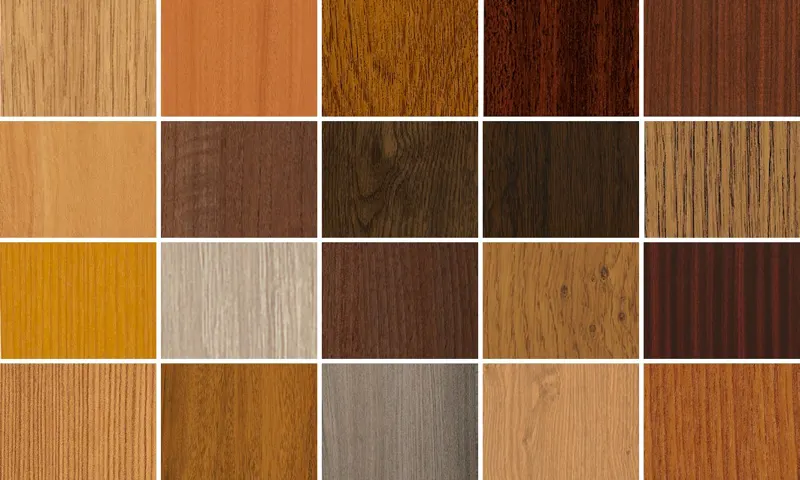
Schueco foils come in more than 300 colours and woodgrains. The inside and outside can be foiled differently, so a window can be white inside and a heritage colour or woodgrain outside.
- Woodgrain foils for a stained-timber look, from light oaks to dark walnut tones.
- Solid colours for the painted-joinery colours many DCPs and heritage schemes call for.
- TopAlu aluminium cladding outside in any RAL colour, on Classic and Rondo sashes.
Foiled frames need steel reinforcement in every case, which we include in the price. Ask us which colours are available for your program.
For builders
Send the shapes with the rest of the schedule. We'll flag any unit near the size limit, any that should be fixed rather than opening, and the safety glass panes.
For architects
Section drawings, Classic and Rondo profiles, glazing bar options and finish samples for heritage submissions and client sign-off.
For resellers
Arched and raked units and glazing bars, fabricated at St Marys in the same finish as the standard CT 70 windows you sell.
Related
Windows to combine with shaped lights
Arched or raked units on the schedule?
FAQ
Questions from builders and architects
Which shapes can you make in CT 70?
Round, full arch, segmental arch, raked (sloping head) and triangular units, plus combinations such as an arched fixed light over rectangular opening sashes. Send a dimensioned elevation of each shape and we'll confirm what can be built.
Can a shaped window open?
Often, yes. Schueco VarioTec hardware has fitting components for round-arch and other shaped sashes. Very small, very large or tightly curved shapes are usually made fixed, with an opening sash beside or below. We confirm this per unit at quote stage.
What kind of glazing bars do you offer?
We fit Georgian-style glazing bars inside the double glazed unit, in the air gap between the two panes. The glass stays flat on both sides, so the window is as easy to clean as a plain one and the bars can't be damaged or come loose. Some heritage DCPs ask for bars on the outside of the glass or structural divisions; if yours does, send us the requirement before you specify.
Will council accept uPVC windows in a heritage conservation area?
It depends on the council and the building. Heritage items and conservation areas are listed in the council's Local Environmental Plan, and its Development Control Plan sets the detailed controls. Some councils accept uPVC that matches the original proportions, glazing bars and colour; others want timber on street-facing elevations. Check with the council or your heritage consultant before you specify.
Can uPVC look like timber?
Schueco foils come in more than 300 colours and woodgrains, and the inside and outside can be different. A woodgrain foil with the Rondo sash and glazing bars gets close to a painted or stained timber window without the repainting. For a painted look in any RAL colour, the outside can have TopAlu aluminium cladding instead.
Are shaped windows subject to different size limits?
The same Schueco CT 70 limits apply: foiled frames must always be steel reinforced, fixed glazing takes up to 250 kg of glass, and a foiled element is limited to 5.0 m² (7.0 m² in white). Send the shapes with the rest of the schedule so we can check each one.