
Performance · Glazing
Glass options for Schueco uPVC windows
We glaze our Schueco windows and doors with insulated glass units from several Australian glass processors: double or triple glazed, clear or low-E, with laminated, acoustic and toughened panes where the job needs them. Our WERS ratings are registered with units from Australian Glass Group (AGG), one of our main suppliers, so the options below use AGG's product names, and every one has a WERS rating on our frames.
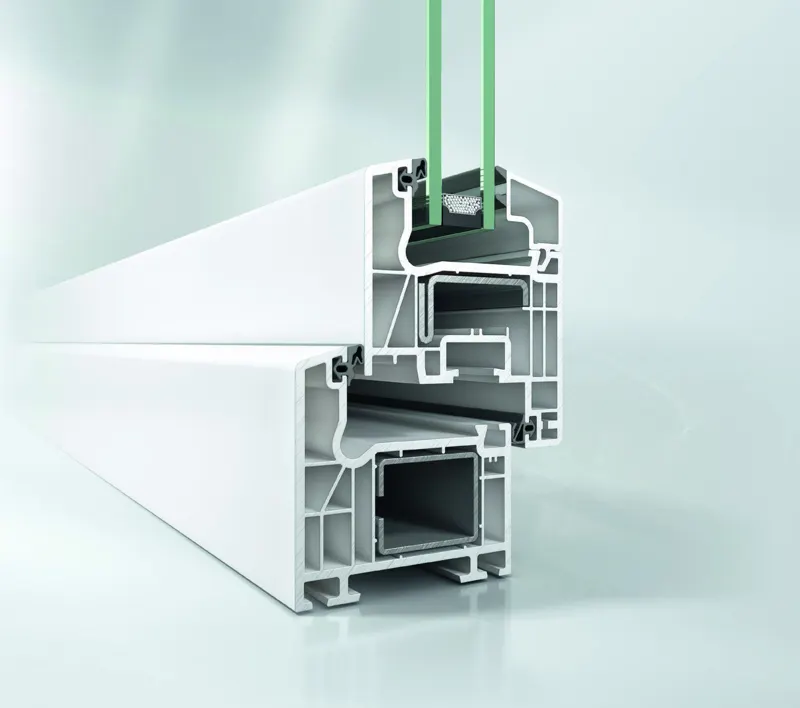
What an insulated glass unit is
An insulated glass unit (IGU) is two or three panes of glass made into one sealed unit. A spacer bar filled with desiccant holds the panes apart, and a primary and secondary seal close the edges. The trapped gap is what cuts heat flow through the glass. AGG fills its Insulglass units with argon as standard, which insulates better than air (AGG notes some specialised sizes may be excluded).
The unit sits in the sash or frame behind a glazing bead and gaskets. What reaches the energy assessor is the whole window: frame, glass and edge together, rated in WERS as Uw, SHGC and Tvw.
Reading a WERS glass name
Our WERS ratings use AGG's naming. Take AGG PLUS Clr 8/12/8 - WE:
- AGG PLUS is the AGG product, here Insulglass LowE Plus.
- Clr is the colour of the second pane: Clr (clear), Gy (grey), lam (laminated).
- 8/12/8 is outer pane / spacer / inner pane in mm, so a 28 mm unit. Triple units have five numbers, e.g. 6/12/6/12/6.
- WE means Warm Edge Spacer. All 340 of our WERS ratings use one.
Warm edge spacers
The spacer is the weak point at the edge of any glass unit. A standard aluminium spacer conducts heat around the glass edge. A warm edge spacer cuts that path, which improves the whole-window U-value, as AGG states in its system data. That's why our ratings are done with warm edge throughout, and it pairs with the uPVC frame, which keeps the inner face of the frame warm as well.
| Glass processor | Australian Glass Group (AGG), Insulglass® units |
|---|---|
| Unit types | Double and triple glazedWERS lists 20–42 mm units on our frames |
| Spacer | Warm edge, on every WERS rating |
| Gas fill | Argon as standardAGG Insulglass brochure; some specialised sizes excluded |
| Low-E | Softcoat (sputtered) coatings: ECO, PLUS, ADVANCE, MAX |
| Glass standards | AS/NZS 2208 safety glazing, AS 4666 insulating glass unitsAGG, certified through Bureau Veritas |
| CT 70 glazing | 4–42 mmTilt and turn, casement, awning, fixed, French and entrance doors |
| SoftSlide glazing | 4–28 mmDouble glazed only |
| EasySlide glazing | 6–42 mmNo WERS ratings yet |
| WERS ratings | 340, manufacturer "Sustainable Windows"werslink.com.au, checked 1 Oct 2026 |
AGG Insulglass range
The glass units we use, and what each is for
Glass-only figures are AGG's centre-of-glass values for a 6/12/6 argon unit (NFRC method). They describe the glass alone. For the window, use the WERS figures further down.
AGG CLASSIC
Uncoated double or triple glazing with argon. The most light and the most solar heat gain, but the weakest insulation of the range. Glass only: U 2.5, SHGC 0.74, VLT 80%.
On our frames: Uw 2.1–2.5 double glazed.
AGG Classic →AGG ECO
AGG's entry-level softcoat low-E: clear, with most of the insulation gain of the higher coatings. Glass only: U 1.4, SHGC 0.54, VLT 79%.
Rated on casement, awning and SoftSlide: Uw 1.6–1.8.
AGG LowE Eco →AGG PLUS
Clear softcoat low-E, coating on the inner pane. AGG pitches it for colder climates: high light and passive solar gain with good insulation. Glass only: U 1.4, SHGC 0.57, VLT 79%.
On our frames: Uw 1.5–1.8; SHGC 0.28–0.49 clear.
AGG LowE Plus →AGG ADVANCE
Softcoat low-E on the outer pane that blocks more solar heat while still looking clear. Glass only: U 1.3, SHGC 0.34, VLT 69%.
On our frames: Uw 1.4–1.8; SHGC 0.18–0.28 clear.
AGG LowE Advance →AGG MAX
AGG's strongest solar-control low-E, on low-iron glass with a slight neutral tone. For exposed west and north glazing and hot climates. Glass only: U 1.3, SHGC 0.28, VLT 67%.
On our frames: Uw 1.4–1.8; SHGC 0.14–0.22 clear.
AGG LowE Max →Triple: PLUS + PLUS, ADVANCE + PLUS, MAX + PLUS
Three panes and two low-E coatings. AGG uses LowE Plus for the second coating, which is where the "+ PLUS" in the name comes from. Glass only (6/12/6/12/6): U 0.70–0.72.
On our frames: Uw 0.9 fixed, 1.1 hinged door, 1.2 tilt and turn.
Triple glazed windows →Each option also comes with grey-tinted or laminated panes. Grey cuts glare and solar gain further but also cuts visible light. Sources: AGG Insulglass brochure (V4.04.26), LowE Plus, Advance, Max and Eco flyers, and AGG Triple Glazed Units performance data (June 2026).
WERS comparison
Uw by glass option and product
Whole-window Uw in W/(m²K) from our WERS ratings. Ranges cover the clear, grey and laminated variants of each option. SHGC and Tvw are for the clear variants, across all products.
| Glass option | Tilt and turn | Fixed | Casement | Awning | Hinged door | SoftSlide door | SoftSlide window | SHGC (clear) | Tvw (clear) |
|---|---|---|---|---|---|---|---|---|---|
| Double · AGG CLASSIC | 2.1 | 2.3–2.4 | 2.2 | 2.2 | 2.2 | 2.4–2.5 | 2.4–2.5 | 0.34–0.62 | 0.39–0.66 |
| Double · AGG ECO | – | – | 1.6 | 1.6–1.7 | – | 1.7 | 1.8 | 0.28–0.42 | 0.39–0.57 |
| Double · AGG PLUS | 1.6 | 1.5–1.6 | 1.6 | 1.6–1.7 | 1.5–1.6 | 1.7 | 1.8 | 0.28–0.49 | 0.39–0.65 |
| Double · AGG ADVANCE | 1.6 | 1.4–1.6 | 1.6 | 1.6 | 1.5–1.6 | 1.6–1.7 | 1.8 | 0.18–0.28 | 0.34–0.56 |
| Double · AGG MAX | 1.5–1.6 | 1.4–1.5 | 1.6 | 1.6 | 1.5–1.6 | 1.7 | 1.8 | 0.14–0.22 | 0.33–0.54 |
| Triple · AGG CLASSIC | 1.6–1.7 | 1.6–1.7 | 1.7 | 1.7 | 1.6–1.7 | – | – | 0.32–0.56 | 0.35–0.60 |
| Triple · AGG PLUS + PLUS | 1.2 | 0.9 | – | – | 1.1 | – | – | 0.25–0.41 | 0.35–0.58 |
| Triple · AGG ADVANCE + PLUS | 1.2 | 0.9 | – | – | 1.1 | – | – | 0.16–0.25 | 0.30–0.50 |
| Triple · AGG MAX + PLUS | 1.2 | 0.9 | – | – | 1.1 | – | – | 0.13–0.20 | 0.29–0.48 |
Source: WERS (werslink.com.au), manufacturer "Sustainable Windows", 340 ratings, checked 1 October 2026. "–" means no rating for that combination. The rating IDs for each unit are available on request. Product WERS ranges are on the energy efficiency page.
Low-E does most of the work
Moving from CLASSIC to any low-E double unit drops Uw from 2.1–2.5 to 1.4–1.8. Between PLUS, ADVANCE and MAX, Uw barely changes on a given frame. The choice between them is about SHGC and light.
The frame sets the floor
The same triple unit rates 0.9 in a fixed window and 1.2 in a tilt and turn window, because the opening sash adds frame area. Sliding SoftSlide units carry more frame again, which is why their figures are higher.
Triple needs two coatings
Triple CLASSIC without low-E rates no better than a low-E double unit. All of the triple-glazing gain in our ratings comes from the units with two low-E coatings.
Low-E and SHGC
Choosing glass by orientation
Low-E coatings are very thin layers of silver and metal oxides on one pane that reflect long-wave heat. They keep indoor heat in during winter. Depending on the coating, they also reflect part of the sun's heat before it gets in. That second effect is what SHGC measures: the share of solar heat that passes through the window.
- West and exposed north glazing. Low afternoon sun and summer heat. A low SHGC from AGG ADVANCE or MAX cuts cooling load. On CT 70 tilt and turn windows these rate SHGC 0.12–0.18.
- Shaded north glazing in cool climates. Winter sun is free heating if eaves keep the summer sun out. AGG PLUS keeps SHGC higher (up to 0.49 on fixed windows) while still insulating.
- South and east. Usually a balance. The assessor's model decides, and it often differs from room to room.
You don't need one glass type for the whole house. Glass can change per opening, and we price what is on the BASIX or NatHERS certificate.
Tvw
Visible light
Tvw is the share of visible light the whole window lets through. Solar-control coatings and tints lower it. On our frames, clear CLASSIC units reach Tvw 0.66 and clear MAX units 0.33–0.54; grey-tinted units drop to 0.16–0.26 on tilt and turn windows. Watch Tvw on south-facing rooms and deep floor plans where daylight is short, and use AGG's selectivity figure (light divided by solar gain) to compare coatings: AGG lists 1.39 for PLUS, 2.03 for ADVANCE and 2.39 for MAX as clear 6/12/6 units.
Double or triple
When to go triple
For most Sydney and coastal NSW jobs, a low-E double unit meets the target. Triple glazing earns its place in cold climates such as the Blue Mountains and Southern Highlands, on large fixed glazing, and where a high star rating is needed. It adds weight (around 45 kg/m² for 6/12/6/12/6 glass) and needs 36–42 mm of glazing depth, so it suits CT 70 but not SoftSlide.
Acoustic glass
Laminated and acoustic laminated glass
Laminated glass is two sheets bonded with an interlayer. An acoustic laminate uses an interlayer that damps sound, and works best against higher-frequency noise. Glass thickness and the air gap help with low-frequency rumble. AGG's acoustic laminate, Audioshield, comes in 6.5, 8.5, 10.5 and 12.5 mm and can go into an Insulglass unit.
Our WERS list includes CT 70 tilt and turn, fixed and hinged door ratings with an AGG Audioshield acoustic laminated pane of 6.5, 8.5 or 10.5 mm (marked "AS" in the glass name), in CLASSIC, PLUS, ADVANCE and MAX versions. With low-E they rate Uw 1.5–1.6, so you don't give up energy performance for the acoustic pane.
For the complete window, Schueco has tested CT 70 tilt and turn to Rw 47 dB with acoustic glass. See acoustic performance for how glass, frame and seals add up. If the job has an acoustic report, send it and we'll match the build-up.
| 6/12/6 double | Rw 34 |
|---|---|
| 6/12/6.38 with laminate | Rw 35 |
| 6/12/6.5 with acoustic laminate | Rw 39 |
| 10/12/10.5 with acoustic laminate | Rw 42 |
| 6/12/6/12/6 triple | Rw 37AGG Triple Glazed Units data, June 2026 |
| CT 70 window, tested | Up to Rw 47 dBSchueco test, 1230 × 1480 mm tilt and turn, acoustic glass |
Glass rows: AGG Technical Bulletin 1012 (Dec 2021). AGG notes glass-only Rw isn't the in-situ or whole-window result.
Safety glass
Grade A to AS 1288
AS 1288 sets where safety glass is required, for example in doors, side panels and glazing close to the floor. We supply toughened or laminated Grade A safety glass to AS/NZS 2208 in those openings, as one or both panes of the unit. Mark the openings on your schedule or ask us to check them.
Security
Laminated for RC 2
CT 70 and EasySlide reach burglar resistance class RC 2 with safety glass added to the Schueco hardware. Laminated glass stays in the frame when broken, which also helps on ground-floor and street-facing openings. See security.
Privacy and glare
Tinted, obscure and frosted
AGG units come with grey tint, obscure patterns, acid-etched or white translucent laminate for bathrooms and street frontages. Grey-tinted units are in our WERS list; ask us before you specify the other privacy options, so the energy figures match.
Glass limits per system
How thick a unit each system takes
The glazing depth a sash or frame accepts sets which units are possible. CT 70 takes everything in our WERS list, triple glazing included. SoftSlide stops at 28 mm, which is why it is rated with double glazing only. EasySlide takes up to 42 mm, but it has no WERS ratings yet, so ask us before you model it.
Weight matters too. Schueco's size tables limit each sash by glass weight, and AGG's rule of thumb is 2.5 kg per m² for every mm of glass. A 4/20/4 unit weighs about 20 kg/m², a 8/12/8 unit about 40 kg/m². We check every sash on the schedule against the system tables before we quote.
| CT 70 windows and doors | 4–42 mmSchueco; WERS units 20–42 mm |
|---|---|
| SoftSlide sliding doors and windows | 4–28 mmSchueco; WERS units 20–28.38 mm, double only |
| EasySlide lift and slide | 6–42 mmSchueco; no WERS ratings yet |
| Double units in our WERS list | 20–34.5 mm |
| Triple units in our WERS list | 36–42 mm |
AGG data
AGG's own documents
For centre-of-glass figures, coating positions and safety glass data, go to the source. These links open AGG's website.
- Insulglass insulated glass unit range (agg.com.au)
- Insulglass brochure (PDF, AGG)
- Triple glazed units: glass-only performance data (PDF, AGG)
- Audioshield acoustic laminate (agg.com.au)
- AGG performance data and downloads
Our own section drawings, Uf tables and WERS rating IDs are on the downloads page or on request.
Need a glass spec matched to your energy or acoustic report?
FAQ
Questions from builders and architects
Which glass should I specify for a west-facing living room?
Start with a low-SHGC unit such as AGG ADVANCE or AGG MAX. On a CT 70 tilt and turn window they rate SHGC 0.12–0.18 in WERS, against 0.25–0.39 for uncoated AGG CLASSIC units, with a similar Uw to AGG PLUS. Your energy assessor makes the final call per orientation, and we quote the unit that is on the certificate.
Is triple glazing always better than double glazing?
No. A triple unit without low-E (AGG CLASSIC 4/12/4/12/4 and similar) rates Uw 1.6–1.7 on our frames, which is no better than a double glazed low-E unit at 1.5–1.6. The real step comes with two low-E coatings: AGG PLUS + PLUS, ADVANCE + PLUS or MAX + PLUS give Uw 0.9 on fixed windows, 1.1 on hinged doors and 1.2 on tilt and turn windows.
What does WE mean in the WERS glass name?
Warm Edge Spacer. Every one of our 340 WERS ratings uses a warm edge spacer between the panes. The other parts of the name follow AGG's own convention: product, colour of the second pane, then outer pane / spacer / inner pane in millimetres, e.g. AGG PLUS Clr 8/12/8.
Can you supply acoustic laminated glass?
Yes. WERS lists CT 70 tilt and turn, fixed and hinged door ratings with a 6.5, 8.5 or 10.5 mm laminated pane, marked AS in the glass name. CT 70 has been tested to Rw 47 dB as a complete tilt and turn window with acoustic glass. Send us the acoustic report and we'll match the glass build-up to it.
Do you supply safety glass to AS 1288?
Yes. We supply toughened or laminated Grade A safety glass in the openings where AS 1288 requires it, such as doors and glazing close to the floor. Mark those openings on the schedule or let us check it. Safety glass is also needed for RC 2 burglar resistance on CT 70 and EasySlide.