
Windows · Schueco CT 70
Schueco uPVC fixed windows
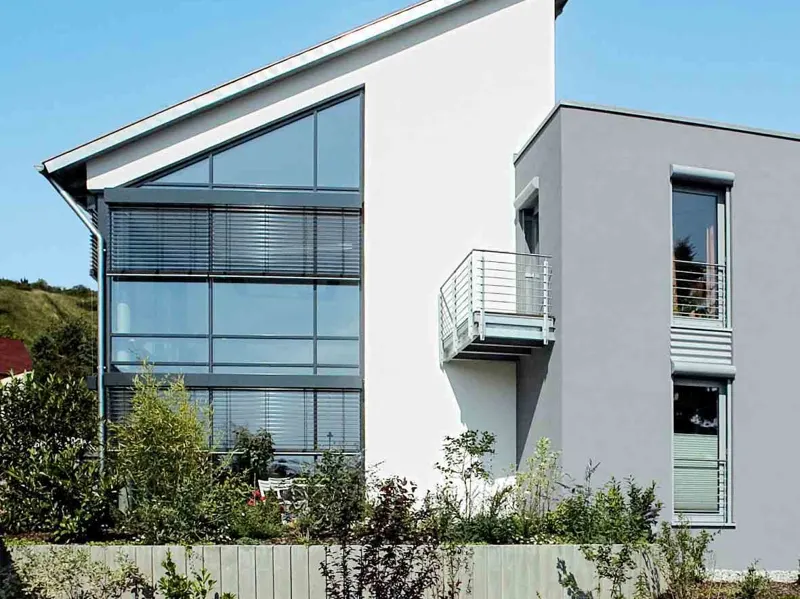
Non-opening CT 70 glazing for picture windows, raked gables, stair voids and the fixed lights beside opening sashes. It's the best-performing window in our WERS ratings: Uw 0.9 W/(m²K) with triple glazing.
Two ways to glaze a fixed light
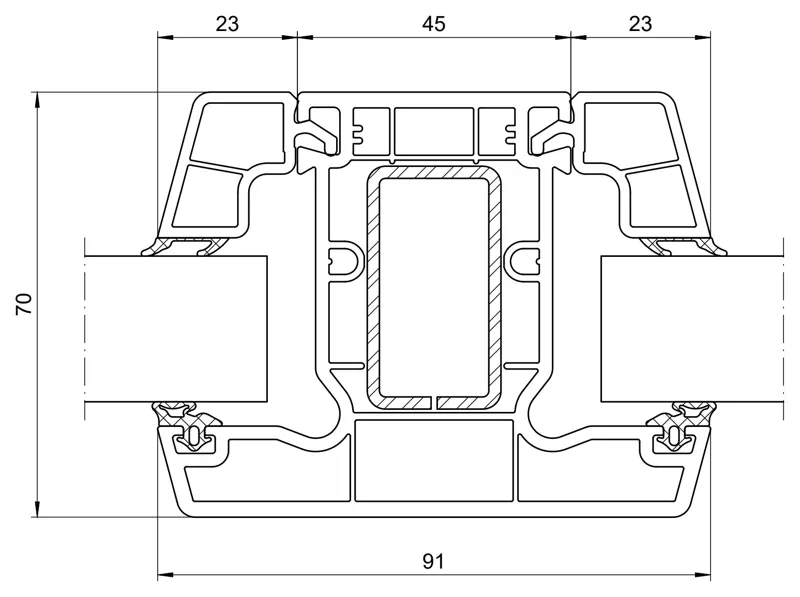
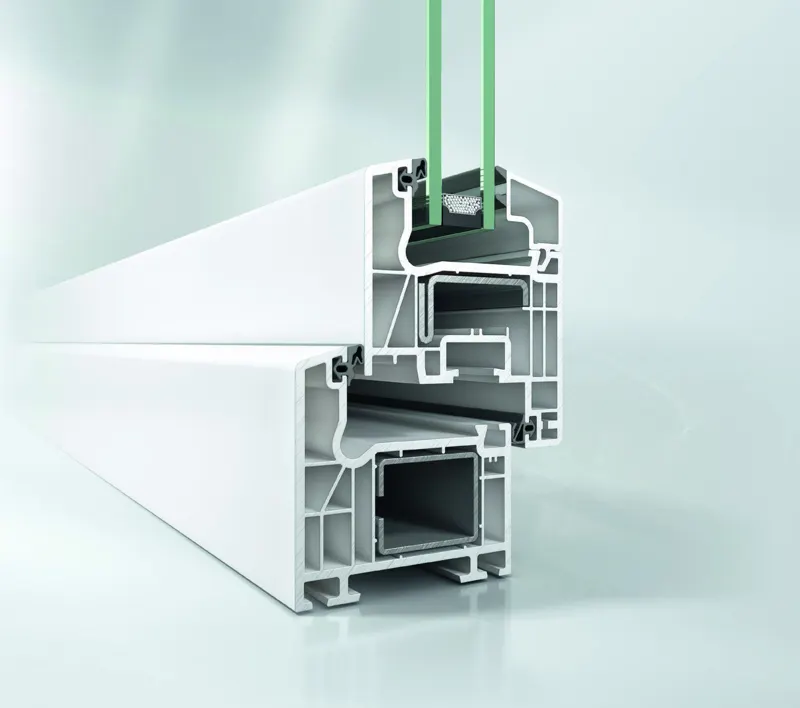
Glass in the frame. The glass unit is beaded straight into the 70 mm CT 70 outer frame. The visible frame is 68 mm wide, the slimmest sight line in the system, and the best choice for large picture windows.
Glass in a fixed sash. The glass sits in a sash profile that doesn't open. Its sight lines match the 120 mm frame and sash of the opening windows next to it, so fixed and opening panes look alike across the elevation.
Either way, Schueco requires steel reinforcement in fixed glazing, and the frame takes the same 4–42 mm glass units as the opening windows.
Why specify CT 70 fixed glazing
- Lowest U-value we offer. WERS Uw from 0.9 W/(m²K) with triple glazing. Frame-only Uf for fixed glazing is 1.1–1.6 W/(m²K), depending on glass thickness and steel.
- Airtight. WERS air infiltration of 0.03 L/s·m², the same as tilt and turn.
- Heavy glass. Up to 250 kg of glass, so large triple glazed or laminated acoustic units are within the system.
- Glass chosen for the orientation. Our ratings cover SHGC 0.18 to 0.62, so the assessor can take solar gain on north glass and limit it on the west.
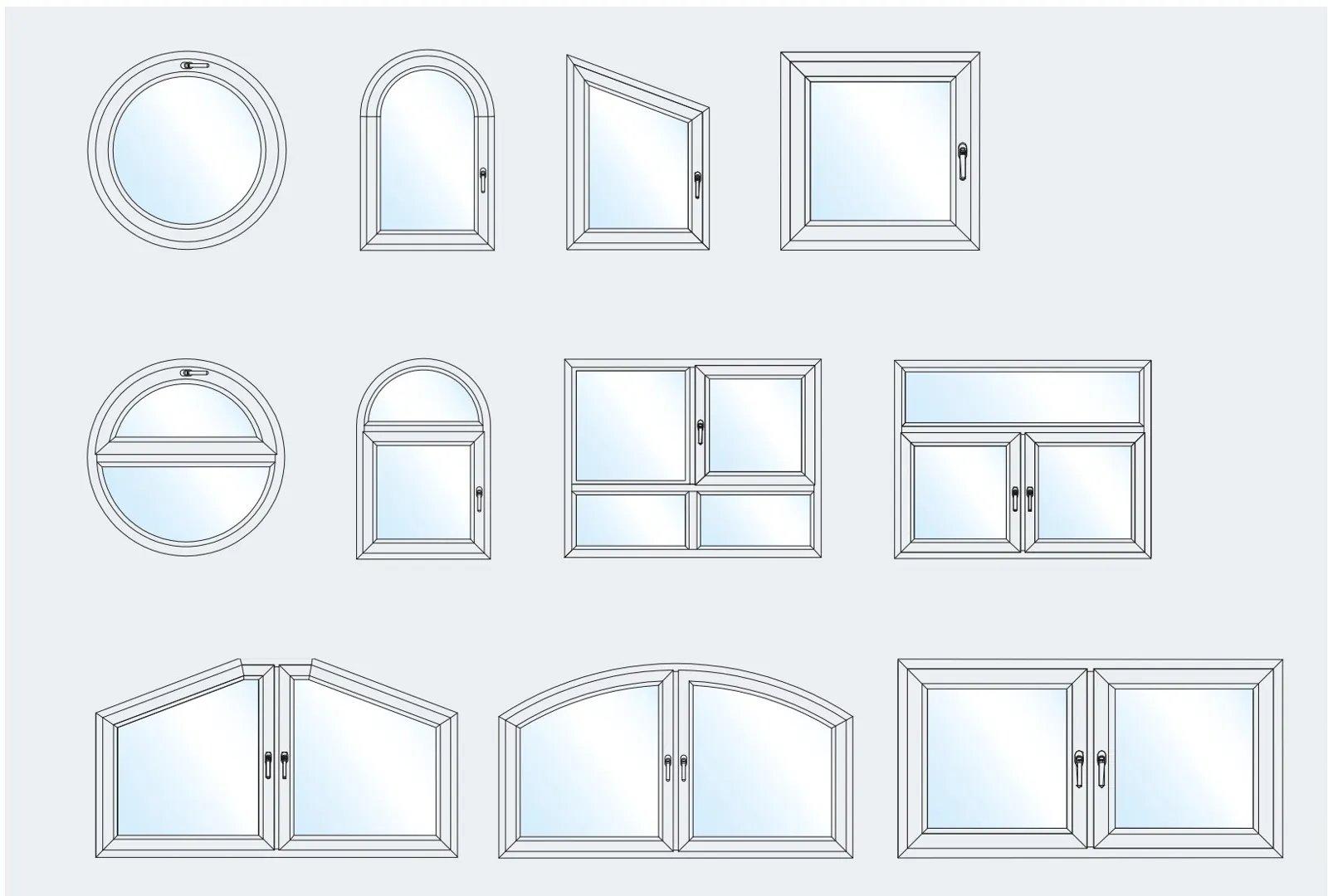
- Shapes. Raked, triangular, arched and round units for gables and feature windows.
Things to plan for
Fixed glass can't be cleaned from inside. On upper floors, put an opening sash beside it or plan outside access.
Large panes are heavy. A unit near the 250 kg glass limit needs lifting gear and enough people on site, and the opening has to be ready when it arrives.
Foiled frames have tighter limits than white: 5.0 m² per element (6.0 m² with 2 mm or heavier steel) against 7.0 m², and frame bars of 2.6–3.0 m against 4.0 m. Large coloured elevations may need an extra mullion.
Glass near floor level, beside doors or in wet areas falls under the NCC glazing safety rules. Mark those panes and we'll specify the glass.
| System | Schueco Corona CT 70 |
|---|---|
| Glazing position | In the frame or in a fixed sash |
| Profile depth | 70 mm, five-chamber frame |
| Face width, glass in frame | 68 mmFrame 70/68; Schueco CT 70 sections |
| Mullion | T-profile 70/9191 mm face width |
| Frame U-value (Uf) | 1.1–1.6 W/(m²K)Schueco CT 70 Uf tables, fixed glazing rows |
| Glazing | 4–42 mm: double or triple glazed |
| Max glass weight | 250 kgAlways reinforced; Schueco CT 70 max sizes |
| Max element area | 7.0 m² white; 5.0 m² foiled6.0 m² foiled with 2 mm or heavier reinforcement |
| Max frame bar length | 4.0 m white; 2.6–3.0 m foiled |
| Shapes | Rectangular, raked, triangular, arched, round |
| Finishes | White, 300+ foils, aluminium cladding |
| WERS Uw | 0.9–2.4 W/(m²K)57 WERS ratings, double and triple glazed (AGG) |
| Best rated unit | Uw 0.9, triple glazedAGG PLUS + PLUS Clear 6/12/6/12/6, WERS SCH-008-007 |
| WERS SHGC | 0.18–0.62 |
| WERS air infiltration | 0.03 L/s·m² |
| AS 2047 rating | Test reports on request |
Shapes and combinations
Fixed glass with opening sashes
Picture windows
A single fixed pane glazed into the frame for the narrowest edge. Pair it with a separate opening window elsewhere in the room for ventilation.
Fixed plus opening
Fixed lights beside, above or below a tilt and turn, casement or awning sash, divided by a T-mullion inside one frame. A sash hung on the mullion carries up to 80 kg of glass.
Raked and arched
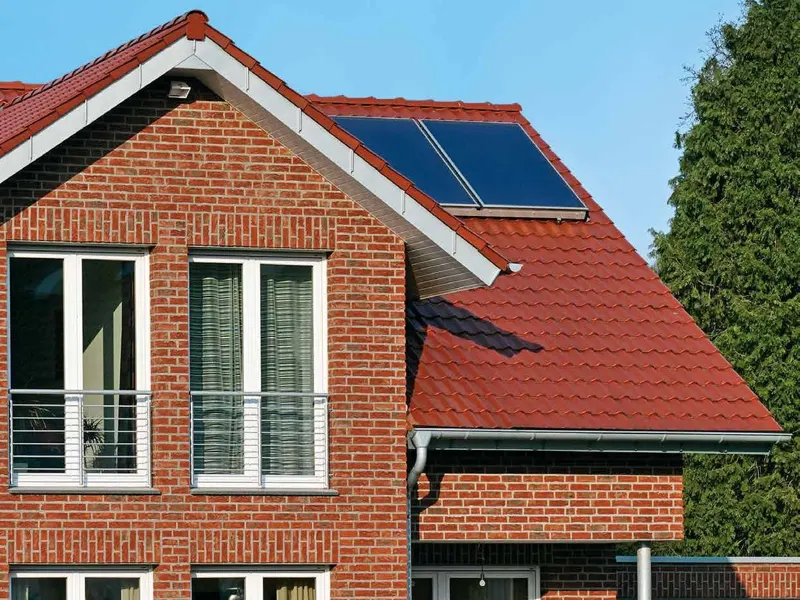
Shaped fixed lights follow a roof pitch or an arch, with opening sashes underneath where the room needs air.
For builders
Send pane sizes with the schedule. We'll tell you which units are near the weight or area limit, which need a mullion, and how they'll arrive on site.
For architects
Sight lines for glass-in-frame and glass-in-sash, the mullion section, Uf values and the WERS list across the full SHGC range.
For resellers
Most window jobs include fixed lights. We supply them glazed and in the same finish as the opening CT 70 windows you sell beside them.
Related
Opening windows to combine with fixed glass
Specifying large fixed glazing?
FAQ
Questions from builders and architects
What is the lowest U-value for a CT 70 fixed window?
Uw 0.9 W/(m²K) in our WERS ratings, with an AGG PLUS + PLUS Clear 6/12/6/12/6 triple glazed unit. Across 57 ratings the range is 0.9 to 2.4, depending on the glass. It's the lowest Uw of any window type we supply.
How large can a fixed CT 70 window be?
Schueco allows up to 250 kg of glass in CT 70 fixed glazing, which must always be steel reinforced. A white element can be up to 7.0 m² with frame bars up to 4.0 m long. Foiled elements are limited to 5.0 m² (6.0 m² with 2 mm or heavier steel) and shorter bars, so large coloured units may need a mullion.
Can fixed and opening sashes be combined in one frame?
Yes. A CT 70 T-mullion splits one outer frame into fixed and opening fields, such as a fixed light over an awning or beside a tilt and turn sash. Schueco limits a sash hung on a mullion to 80 kg of glass.
Should the glass sit in the frame or in a fixed sash?
Glass in the frame gives the slimmest sight line, 68 mm. Glass in a fixed sash matches the 120 mm frame and sash width of the opening windows beside it, so every pane on the elevation looks the same size. We'll draw both if you're unsure.
Can you make raked, arched or round fixed windows?
Yes. CT 70 can be made in raked, triangular, arched and round shapes, which suits gable ends and feature windows. Send a dimensioned elevation and we'll confirm what can be built.
Which SHGC should I specify for fixed glazing?
Our fixed window ratings cover SHGC 0.18 to 0.62, the widest range in the CT 70 set. High-SHGC glass lets in winter sun on north-facing glass; low-SHGC glass cuts heat gain on west elevations. Your energy assessor's model sets the figure, and we match the WERS-rated glass to it.